
Stop people Pleasing
How People-Pleasing Steals Your Power (And How to Take It Back)


People-pleasing is just self-abandonment dressed up as kindness.
People-pleasing is one of those habits that feels harmless until it slowly starts eating away at who you are. For the longest time, I didn’t even realize I was doing it. I thought saying yes to everything made me a good friend, a dependable person, someone who others could count on. But looking back now, I can see how much of myself I was sacrificing just to keep people happy; people who rarely considered how I felt in return.
There was a time I had this friend who had betrayed me deeply. The kind of betrayal that makes your stomach drop, the kind that shakes your trust in someone you thought you knew. I remember feeling hurt, humiliated even, and telling myself I deserved better. But when they reached out to me again, acting like nothing had happened, I still went. I still showed up, choosing their comfort over my own pain. I remember getting dressed that day, feeling uneasy the whole time, knowing damn well I shouldn’t have gone, yet I didn’t want to seem rude or “dramatic.” That’s the thing about people-pleasing: even when your intuition is screaming no, you whisper yes.
And if that wasn’t enough, on the same day, another friend invited me to her birthday dinner; last minute. I wasn’t included in the plans and I wasn’t part of the group chat. I wasn’t thought of from the beginning. She only remembered me when the plans were already made, almost like an afterthought. And instead of seeing it for what it was, instead of asking why I was only good enough when someone else remembered me late, I actually considered going. Because I didn’t want her to feel bad. Because I didn’t want to seem “sensitive.” Because I didn’t want to create “drama.”
But honestly? It hurt.
It hurt to realize that people I cared about didn’t prioritize me.
It hurt to see myself accepting crumbs and calling it connection.
It hurt to feel like the only time I was included was when it was convenient for them.
And yet, I still kept saying yes.
That’s what people-pleasing does; it convinces you that your discomfort is a smaller price to pay than someone else’s disappointment.
I didn’t see it then, but both situations were mirrors. They showed me how badly I needed people’s approval, how much I feared rejection, and how little I valued my own boundaries. I was so used to fighting to be included that I didn’t even realize I was choosing situations that made me feel small.
Over time, I started to understand something important: no amount of people-pleasing will make the wrong people treat you right. You can sacrifice your comfort, your peace, your time, and your energy; but if someone doesn’t genuinely value you, nothing you do will change that. And if someone only thinks of you last, that’s exactly where you stand in their life.
Healing from people-pleasing didn’t happen overnight. I had to learn to pause before saying yes. I had to ask myself, “Am I doing this out of love, or out of fear?” I had to sit with the guilt that comes with saying no because guilt is normal when all you’ve ever done is bend. I had to accept that some people would leave when I stopped being their emotional cushion. And honestly? Good riddance.
The more I honored my boundaries, the more I realized something beautiful: the right people never made me feel guilty for choosing myself. They didn’t punish me for saying no. They didn’t make me earn their affection and they didn’t disappear when I stopped over giving.
But the wrong ones? They faded and grew distant. They got irritated, and that told me everything I needed to know.
If you’re someone who gives too much, who says yes out of habit, who feels responsible for everyone’s comfort but your own; you’re not alone. People-pleasing is a survival tactic many of us learned early in life. It kept us safe, and kept us accepted. But now, it’s keeping us small.
You deserve friendships that include you from the beginning, not at the last minute.
You deserve relationships where you don’t have to shrink to be chosen.
You deserve to listen to yourself the first time, not after you’ve been hurt twice.
And most importantly, you deserve to say no without feeling like you’re betraying everyone else.
You’re not here to carry people.
You’re here to live fully.
And that starts when you stop abandoning yourself for the sake of being liked.
Join other paid subscribers…I am currently running a Black November sale.
Please note that paid subscribers now get 3 new articles every week and access to exclusive eBooks designed to help you grow, heal, and reconnect with yourself: including;
Love That Heals: Rewriting Your Relationship With Yourself & Others
A gentle guide through love, attachment, and boundaries; including journaling sections to help you reflect on what you truly deserve. (coming this November)
The InnerLight Reflection Journal: 30 Days of Honest Conversations With Yourself
A subscriber-only reflection series with 30 guided prompts, healing quotes, and themed questions to deepen your self-awareness. The eBooks are a lifetime access including new ones released every month.
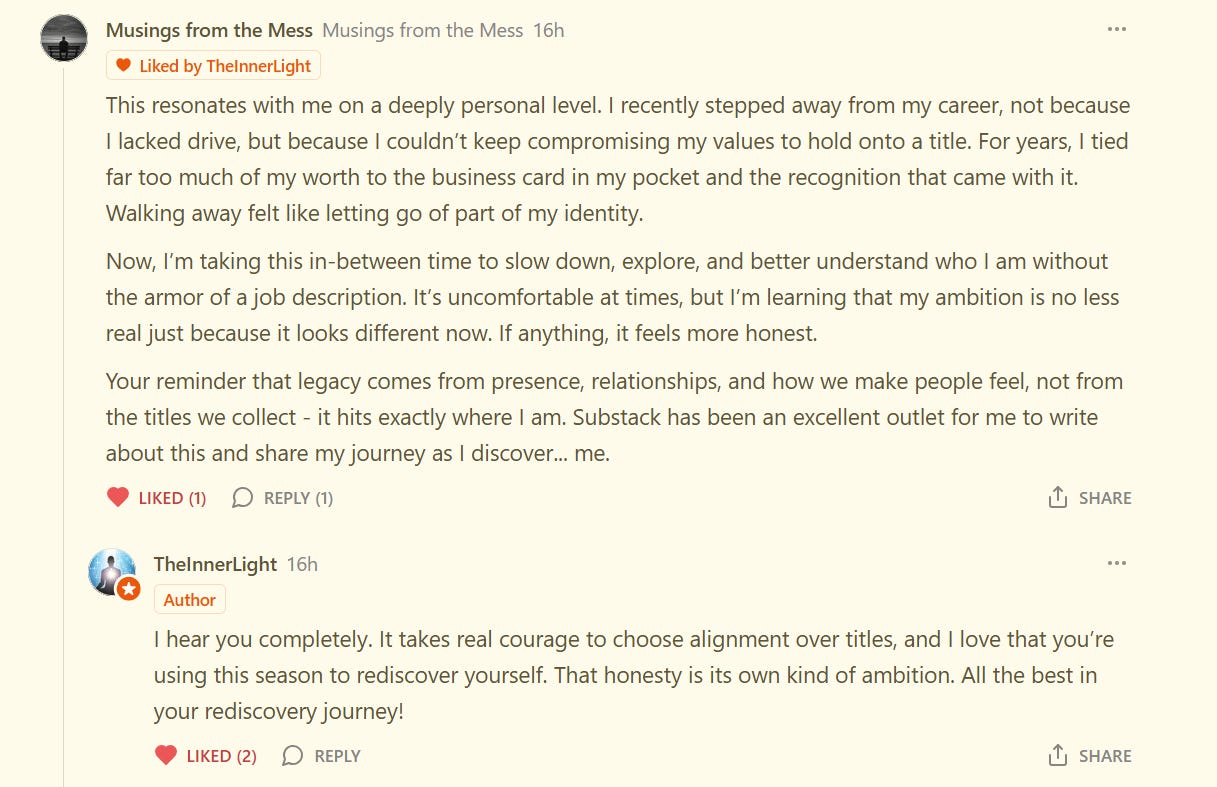
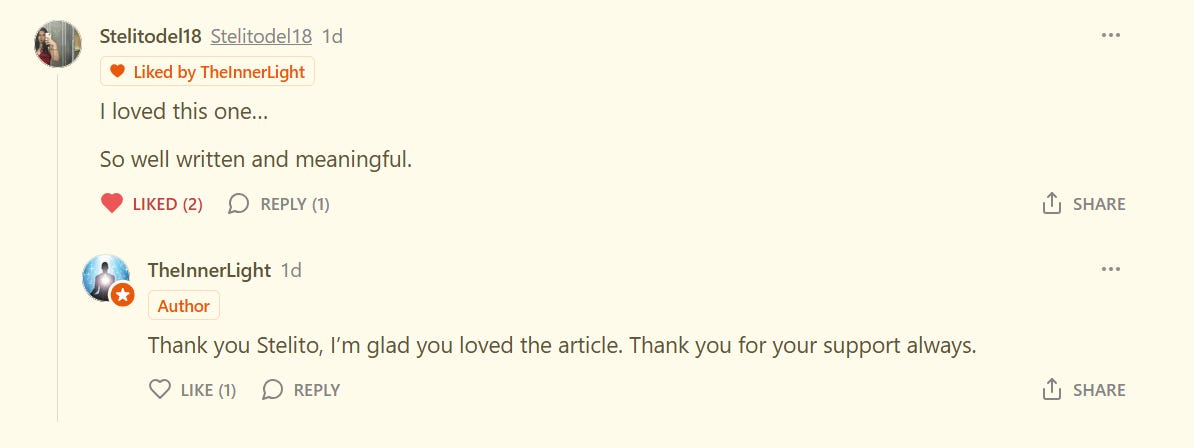
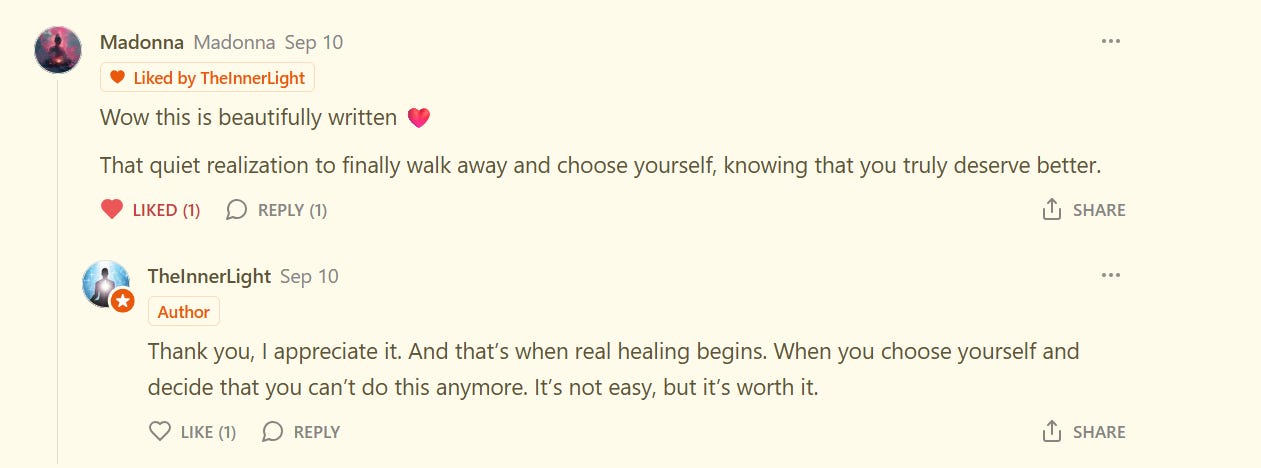
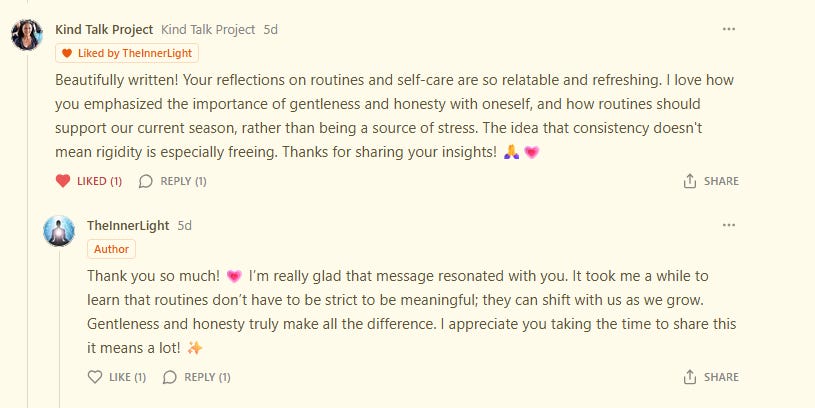
Readers’ Feedback.
Previously..
The Fear of Being Too Much Keeps Us Small.

I used to shrink myself in spaces where I felt like I was “too much.” In a friendship group where I was the smartest, I’d act less capable so I wouldn’t stand out. In a relationship where my voice or dreams felt bigger than what was welcome, I’d quiet them down. I thought making myself smaller would keep me loved, accepted, and safe. But all it really d…
We Outgrow People Quietly: The Grief of Soft Goodbyes

There’s a particular kind of heartbreak that doesn’t get the same attention as messy breakups, dramatic fallouts, or friendships that end with a slammed door. It’s the quiet kind; the soft fading of people we once thought would be permanent fixtures in our lives.
The Versions of You: Letting go of who you were to embrace who you are becoming

There's a quiet ache that shows up when you're growing. Not because you're doing anything wrong, but because parts of you; old dreams, old roles, and old identities are slowly fading. Letting go of who you used to be, even if that version of you was built for survival, still hurts.
I tend to be a people pleaser, but do realize that no matter how hard you try, there are some people you're never going to please.
This really resonated. I’ve been thinking about the difference between adapting how you communicate and changing who you are. Most of us cross that line so often we’ve stopped noticing. I explored this recently — the energy cost, the trust erosion, the identity blur that comes from performing in too many rooms for too long. https://substack.com/home/post/p-189656830